Building Code Compliance
NCC Section J Energy Modelling
NCC 2022 Section J and J1V3 compliance · Deemed-to-Satisfy and performance solution reports
Section J of the National Construction Code (NCC) sets the mandatory energy efficiency requirements for commercial buildings in Australia. It covers the building fabric (roof, walls, glazing), building services (HVAC, lighting, hot water) and, for Class 3 multi-residential buildings, thermal performance. Meeting Section J is a condition of a building permit for virtually all new commercial and mixed-use developments.
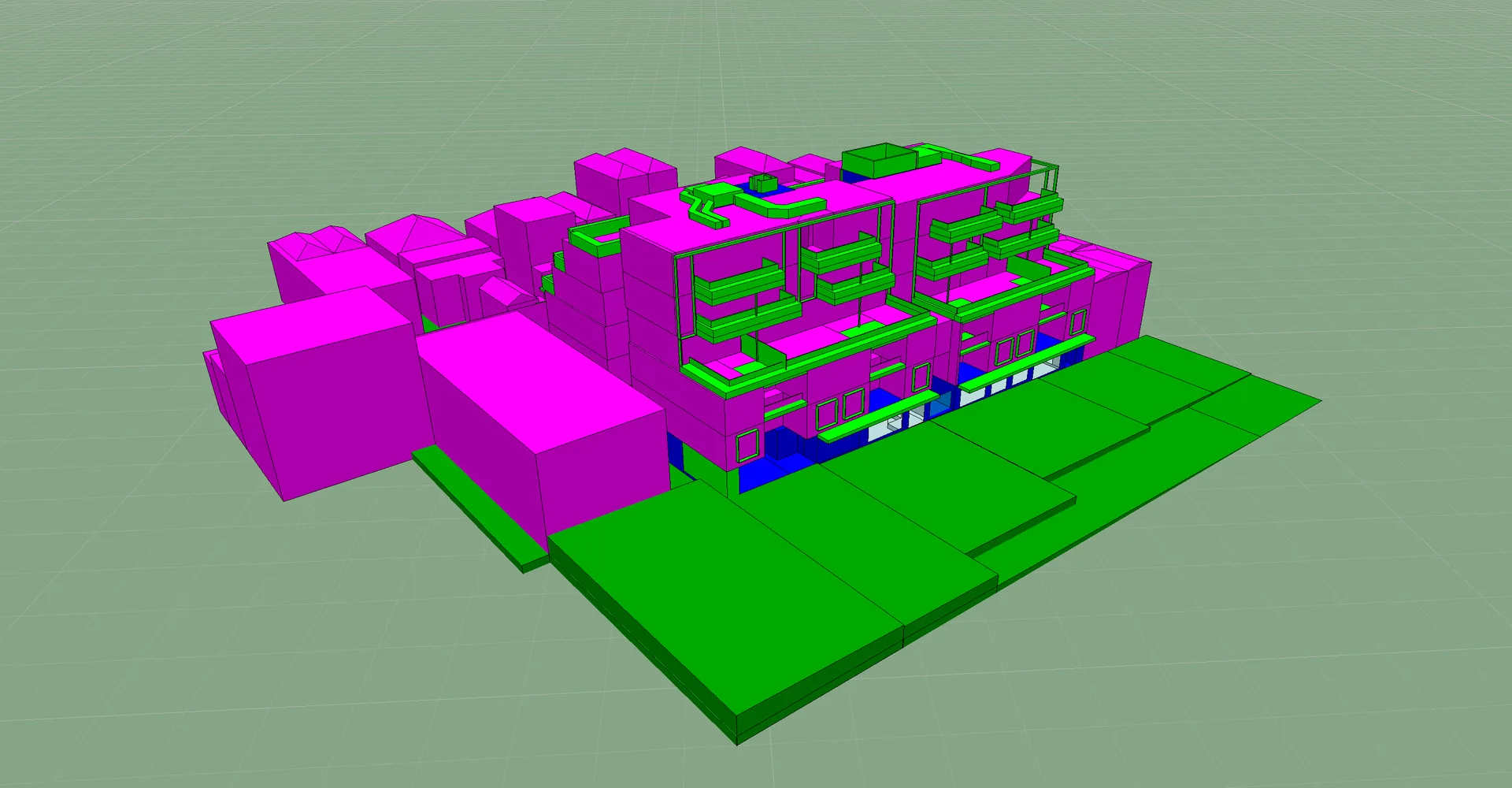
Ark Resources prepares Section J compliance reports using both the Deemed-to-Satisfy (DTS) pathway and the more flexible J1V3 performance solution. Our J1V3 modelling uses accredited simulation software to demonstrate energy performance on a whole-of-building basis, typically unlocking design flexibility that DTS compliance does not allow, enabling better architectural outcomes without compromising compliance.
With 25 years of experience across commercial offices, retail, hotels, mixed-use towers and large-format residential, our team understands how to navigate the NCC energy provisions efficiently. We engage early with design teams to identify compliance risks and opportunities at the stage where they can still influence design, not after documentation is complete.
Section J of the NCC (formerly the BCA) is the energy efficiency volume for commercial buildings (Class 3, 5, 6, 7, 8 and 9). It prescribes minimum performance levels for the building envelope, HVAC systems, lighting, hot water and metering. Compliance is mandatory for building permit approval.
There are two pathways: Deemed-to-Satisfy (DTS), which verifies compliance against prescriptive benchmarks, and J1V3 Performance Solution, which uses energy simulation to demonstrate equivalent or better performance.
- →High glazing ratios that exceed DTS WWR limits
- →Non-standard orientations or complex massing
- →High-performance HVAC systems offsetting envelope trade-offs
- →Integrated renewables or passive design strategies
- →Heritage or constrained sites with limited envelope options
Section J and J1V3 Services
Section J FAQs
Do I need a Section J report for my project?
Yes, if your project is a new commercial building or a major renovation of a Class 3, 5, 6, 7, 8 or 9 building. Section J compliance is a mandatory condition of building permit approval in all Australian states and territories under the NCC.
What is the difference between DTS and J1V3?
The DTS (Deemed-to-Satisfy) pathway checks each building element against prescriptive benchmarks. J1V3 is a performance-based pathway that uses whole-building energy simulation to demonstrate compliance; it typically offers more design flexibility but requires detailed modelling. Ark Resources uses J1V3 when DTS is too restrictive for the architectural design.
When should I engage a Section J consultant?
As early as schematic design. Engaging at DA or early SD stage allows Section J requirements to inform glazing ratios, shading, insulation and services selection before design is locked. Late engagement (at documentation stage) often results in costly redesign or compliance workarounds.
How long does a Section J report take?
A DTS report typically takes 5 to 10 business days from receipt of complete documentation. A J1V3 performance solution requires 2 to 4 weeks depending on model complexity. We provide accurate timeframes at project briefing.
Does Section J apply to residential buildings?
Section J applies to Class 2 (apartments) buildings. Standalone houses and townhouses (Class 1) use NatHERS thermal ratings instead. Mixed-use buildings may require both Section J (for commercial portions) and NatHERS (for residential apartments).
How does J1V3 compare to DTS in cost and time?
J1V3 involves greater upfront effort than a DTS report: a full building simulation model takes 2 to 4 weeks depending on complexity. However, the design flexibility it enables often saves significantly more in construction cost and architectural value than the modelling fee. For complex or high-glazing projects, J1V3 is frequently more cost-effective overall.
Can J1V3 modelling support Green Star and NABERS simultaneously?
The energy model developed for J1V3 compliance can often be extended for Green Star energy credits and NABERS energy commitments, reducing duplication of effort. Ark Resources routinely coordinates J1V3 models with Green Star and NABERS design-stage targets.
Our Section J Team
Our consultants have prepared Section J and J1V3 reports for over 25 years across Melbourne and nationally. Get in touch to discuss your project.


You May Also Need
Need Section J compliance for your project?
Ark Resources has prepared NCC Section J reports and energy assessments across Melbourne and nationally for over 25 years. Contact us to discuss your project.