"I'll Be Remembered for My Parks, Not My Buildings" - Adelaide Developer
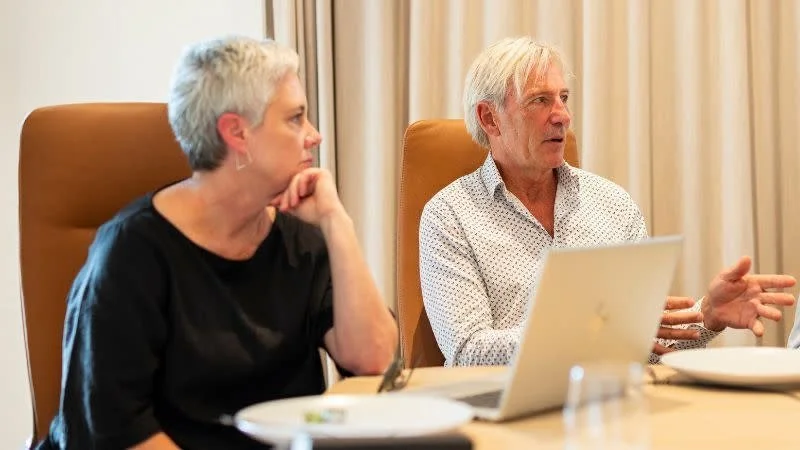
The Urban Developer nature-based cities roundtable, Adelaide, June 2026.
- Parks over buildings: Adelaide developer Kite Projects has delivered more than 120,000sqm of public open space, with its MD saying parks will define his legacy more than any structure he has built.
- Policy gap: Despite Australia's 2022 commitment to the UN biodiversity framework, Nature Based Cities says urban greening targets haven't yet translated into planning regulations or rating tools.
- New precinct scorecard: NBC's scorecard now extends to master planned communities, focusing on retaining existing ecology and biodiversity rather than offsetting what's lost.
At a recent industry roundtable in Adelaide, a developer, a not-for-profit and an ESD consultancy converged on the same conclusion: the property sector has made good progress on carbon, but nature has been left behind, and a new framework is now designed to close that gap.
Parks as a Legacy
Kite Projects managing director Damon Nagel told the roundtable that his firm's two Adelaide developments have collectively produced over 120,000sqm of public open space. His Hamilton Hill project, at the base of the Adelaide Hills, preserves a six-hectare park with trails connecting directly to Morialta Conservation Park.
"I think, ironically, when I die I'll be remembered for my parks, not my buildings."
Damon Nagel, Managing Director, Kite Projects
When I die I'll be remembered for my parks, not my buildings.
Damon Nagel, Managing Director, Kite ProjectsRedressing the Balance
NBC advisory council member Jan Talacko noted the industry has spent 15 years focused on reducing emissions from buildings, but hasn't matched that effort on nature. NBC was founded around four and a half years ago to address that gap, aiming to increase urban green space, strengthen biodiversity and embed living landscapes into development projects.
Australia's sign-up to the UN global biodiversity framework in Montreal in 2022 includes specific urban greening targets, but Talacko said those commitments haven't yet filtered through to local planning policy or ESD frameworks. This is something NBC is working to help change.
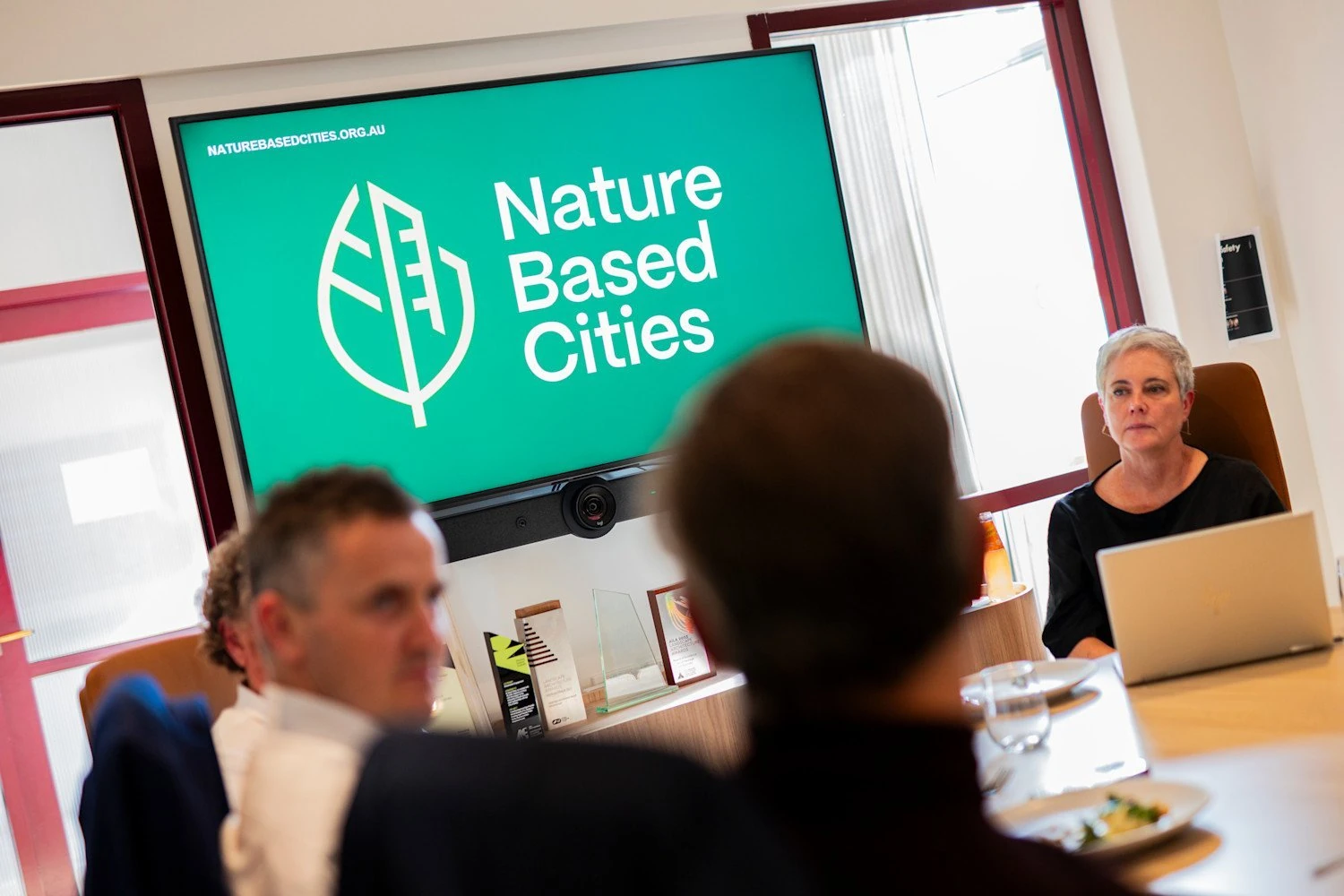
Nature Based Cities advisory council members Janis Fischer and Jan Talacko at the roundtable.
The Scorecard
NBC advisory council member Janis Fischer presented the organisation's scorecard: a ten-criteria framework covering canopy coverage, biodiversity, green views and tree retention, designed to work alongside existing tools such as Green Star. The new precinct scorecard extends this to master planned communities, with a premium placed on retaining what already exists on a site rather than compensating for what development removes.
"We can actually use this document as a way the development team can set their targets right from the start of the project."
Janis Fischer, NBC Advisory Council Member
Accreditation is free for early adopters and grants the right to use NBC logos on marketing materials. Developers don't need to score across every criterion; retaining any ecologically significant site features is the baseline requirement.
Research by Urbis found green space can generate meaningful price premiums on both apartments and homes. Separate research by Ark Resources found Australia's existing ESD rating tools don't place sufficient weight on nature, reinforcing the case for a dedicated framework.
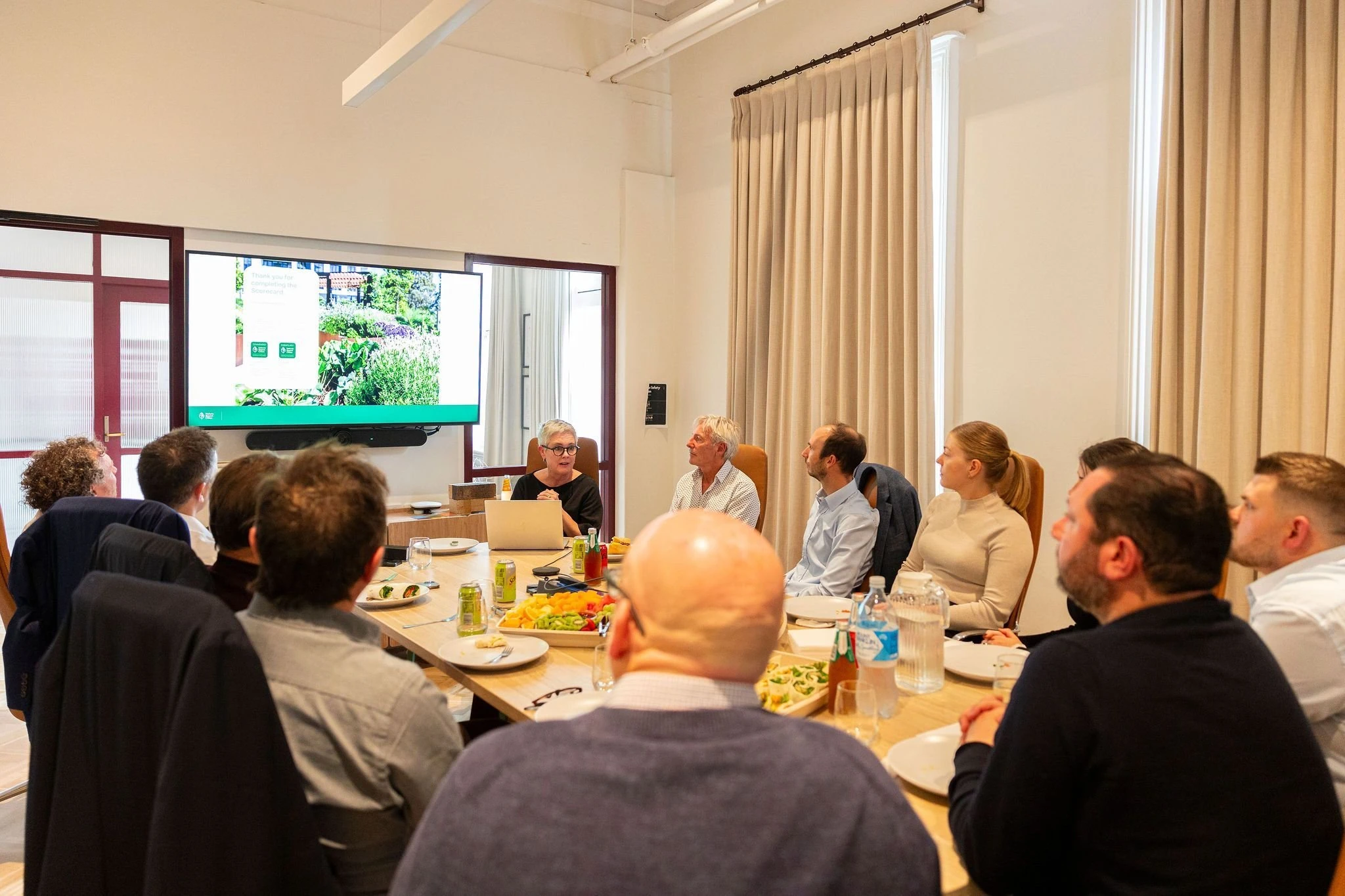
Damon Nagel addressing the roundtable. Kite Projects has delivered more than 120,000sqm of public open space across two developments.
Get in touch with our team